


Share This Article
If you have ever shown up to a field only to realize you were supposed to be on a different diamond across town, or worse, missed a game entirely, you already know this truth: staying organized as an umpire is not optional. It is part of being professional.
Umpires manage more than the game itself. We coordinate with leagues, assigners, partners, travel, weather changes, and last-minute updates, often handling multiple games in a day. A single missed email or calendar error can quickly lead to problems.
Let’s dive into tightening that up.
Not in a complicated way. Not in a tech-heavy way that feels overwhelming. Just real systems, real habits, and real tools that help you keep your game schedule clean, accurate, and stress-free. When your schedule is in line, everything else falls into place.
Why Schedule Organization Matters More Than You Think
Most schedule problems do not come from laziness. They come from an assumption.
You assume the game time stayed the same.
You assume the field location did not change.
You assume your partner has the same information you do.
You assume you will remember the details later.
Assumptions are where double bookings live. Don’t assume! Make this your own personal rule, when in doubt call, text email someone that has the correct answer.
When you accept an assignment, you are committing to the assigner, the league, the teams, your partner, and yourself. Missing a game or backing out late not only hurts your reputation with the assigner, but it also puts stress on your partner and creates chaos for everyone involved.
Staying organized does three critical things:
- It protects your credibility
- It reduces pre-game stress
- It improves communication with your partner
Those three things directly impact how often you get assigned games in the future.
The Real Reason Umpires Double Book
Double booking usually happens for one of these reasons:
- Games accepted from multiple assigners without a single master calendar
- Relying on emails or texts as the schedule instead of recording them
- Not blocking travel time between games
- Forgetting to update a schedule after a change
- Assuming a partner has confirmed details when they have not
The fix is not working harder. The fix is working cleaner.
You need one place that tells the truth about your schedule.
Build One Master Schedule and Trust It
Every assignment you accept needs to go on one master schedule. Not two. Not three. One.
This is the schedule you check before accepting a game. This is the schedule you check the night before. This is the schedule you trust when something feels off.
If you only take one idea from this article, take this one:
Nothing counts as scheduled until it is written down in your master system.
Emails are not a schedule. Text messages are not a schedule. Your memory is definitely not a schedule.
5 Tools That Will Help You Stay Organized and Aware of Your Games
Here are five tools that work well for umpires at every level. You do not need all five, but you should be using at least two consistently.
1. Google Calendar or Apple Calendar
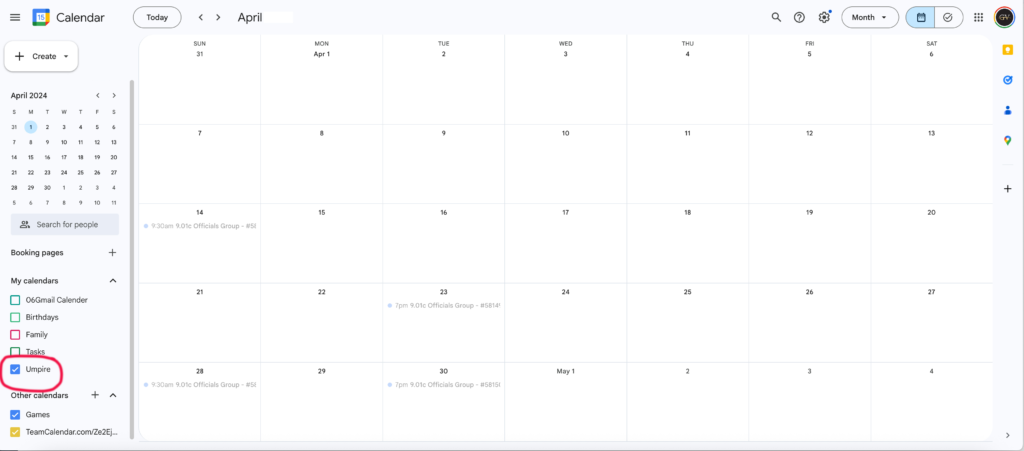
This is your foundation.
A digital calendar lets you:
- Block off dates and times
- Add field locations and notes
- Set reminders
- See conflicts instantly
Create a separate calendar just for umpiring. Color-code it differently from work or family events so games jump off the screen.
Every game entry should include:
- League name
- Game time
- Field name and address
- Partner name
- Assigner name
Add a reminder for the night before and another one two to three hours before game time. That alone will prevent most missed games.
2. A Dedicated Umpire Notebook or Journal
Digital is great, but paper still matters.
A simple umpire notebook gives you a backup and a planning tool. Use it to:
- Write weekly schedules
- Track upcoming weekends
- Note changes or special instructions
- Record partner contact info
This is especially helpful when working tournaments or multi-game days. Writing things down reinforces memory and catches mistakes early.
If you use a umpire journal regularly, it becomes part of your pre-game routine and keeps everything grounded.
I use a journal to keep all my notes in one place. My journal has black sheets so I can keep everything organized.
3. Assignment Platforms Used by Your League
Many leagues use platforms like Arbiter, Assignr, or similar systems. These are helpful, but they should not be your only source of truth.
Use them to:
- Accept or decline games
- Review official assignments
- Receive updates
Then immediately transfer accepted games to your master calendar. Do not assume you will always log back in to check details. Systems go down. Notifications get missed. Your calendar does not.
4. Reminder and Task Apps
Apps like Todoist, Reminders, or even basic notes apps help with the details around games.
Examples:
- Confirm partner contact
- Check weather
- Pack specific gear
- Review ground rules
A simple checklist before game day keeps you ahead of problems instead of reacting to them.
5. A Consistent Pre-Game Communication Habit
This is not an app, but it is one of the most important tools you have.
Once a game is scheduled, get in touch with your partner before game day. Not five minutes before first pitch. Not when you are pulling into the parking lot.
A quick message 24 to 48 hours before the game does several things:
- Confirms game time and location
- Confirms arrival time
- Confirms plate and base assignments
- Confirms uniforms
This habit alone prevents missed games, mismatched uniforms, and awkward pre-game confusion.
As a part of my own personal organization of my game schedule, have my monthly schedule posted on my Aura Aspen Digital Photo Frame. Some will argure this is going a bit far and I might not argure with you. But this way my schedule is always in my face when working at my desk and allows me to plan accordingly for the day, week or month.
Why Partner Communication Is Part of Staying Organized
Staying organized is not just about your schedule. It is about shared responsibility.
When you reach out to your partner ahead of time, you are creating a second layer of accountability. If something is wrong on the schedule, it gets caught early.
This ties directly into the concepts discussed in the article Umpire to Umpire Pre-Game Conference. That article focuses on what happens when umpires communicate clearly before the game. The same principle applies days before the game even starts.
Good pre-game communication does not start at the plate meeting. It starts when the assignment hits your calendar.
Make Schedule Review Part of Your Weekly Routine
Pick one day a week and review your upcoming schedule. Sunday night works well for many umpires.
During that review:
- Confirm times and locations
- Check for tight travel windows
- Verify partner names
- Look for potential conflicts
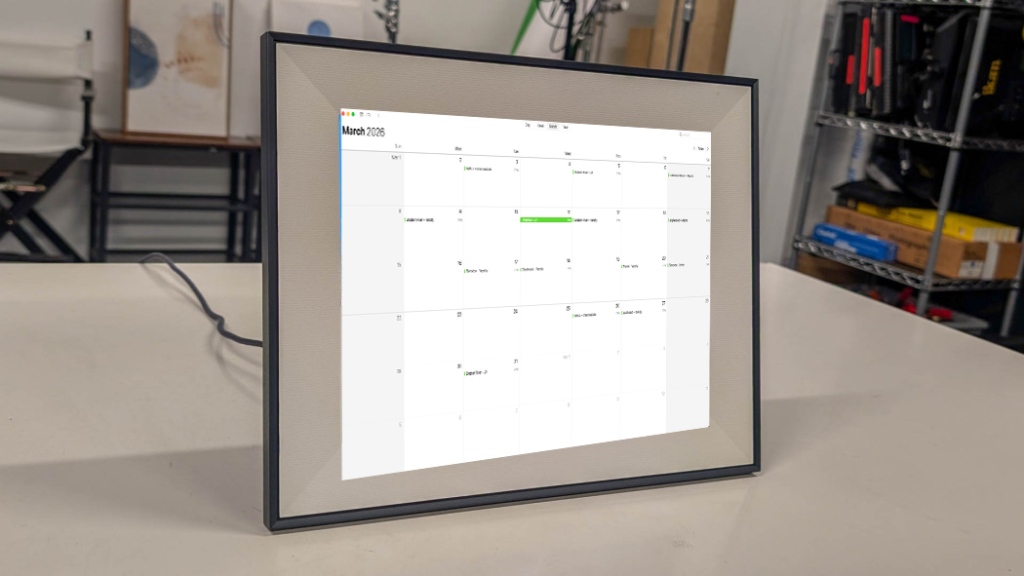
Five minutes once a week can save you from a major headache later. I link my applecalendar with my Aura Aspen Digital Picture Frame so I have my schedule in my face every day. I look at it several times a day while sitting at my desk so I know what my schedule is.
The Professional Difference
Here is the hard truth: assigners notice who is organized.
They notice who never misses games.
They notice who communicates early.
They notice who catches mistakes before they become emergencies.
Those umpires get more games. Better games. Postseason games.
Staying organized is not about being perfect. It is about being reliable.
Making You A Better Umpire
Umpiring already demands focus, confidence, and preparation on the field. Your schedule should support that, not fight against it.
Build one master calendar. Use tools that fit your style. Write things down. Communicate early with your partner. Review your schedule regularly.
Do those things consistently and you will eliminate double bookings, missed games, and unnecessary stress. More importantly, you will carry yourself like the professional umpire you are working to become.
If you want to sharpen your communication even further, revisit the Umpire to Umpire Pre-Game Conference article and make partner contact part of your standard process before every game.
Organization is not extra work. It is part of the job.
